

Irlen Syndrome: When Your Brain Struggles to Process What Your Eyes See
TL;DR
Reading time: 10 minutes
Expert: Helen Irlen, Irlen Institute founder
Reviewed by: Goodmood Research
Sources: 1 perceptual processing researcher, clinical data
Irlen Syndrome affects 10 to 12% of the population but is frequently misdiagnosed as dyslexia or ADHD. The core problem is not your eyes, it’s how your brain processes visual information. Colored spectral filters or overlays normalize this processing, making text clear and reading effortless. The solution is non-invasive, scientifically proven, and life-changing for millions.
What Is Irlen Syndrome?
You sit down to read. The words seem to swirl. Letters flow off the page. You see double vision. Or maybe the page just looks blurry no matter how hard you focus.
You’ve probably heard you need stronger glasses. You’ve tried them. Nothing changed.
The problem is not your eyes. It’s how your brain processes visual information.
This is Irlen Syndrome, a perceptual processing disorder discovered by educational therapist Helen Irlen over 30 years ago. It affects an estimated 10 to 12% of the population, yet most people who have it never get diagnosed.
How It Feels (And Why It’s Often Misdiagnosed)
People with Irlen Syndrome describe reading like this:
Common visual experiences:
• Words appear to swirl, flow, or pulse
• Letters seem to move or rearrange
• Text looks blurry or doubled
• White page glare feels intense
• Words appear to drop off the page
• Lines seem to flow into each other (called "rivers")
• Everything looks like an optical illusion
The result? Reading becomes exhausting.
What happens as a result:
- Eye strain and fatigue
- Headaches or migraines while reading
- Poor comprehension (because you’re working so hard to see, there’s no mental energy left for meaning)
- Slower reading speed
- Avoidance of reading altogether
- Difficulty with concentration and focus
Why the misdiagnosis:
Many people with Irlen Syndrome are told they have:
- Dyslexia
- ADHD
- A learning disability
- A vision problem requiring stronger glasses
But here’s the critical insight: About half of all people diagnosed with reading problems and learning disabilities actually have an underlying cause they never discovered, Irlen Syndrome.
Standard psychoeducational evaluations do not uncover Irlen Syndrome. Many psychologists are not aware of it. So the person gets treatment for the wrong condition, and nothing improves because the root cause is untreated.
The Brain’s Role in Vision
Your eyes don’t see. Your brain does.
Your eyes collect visual information. But your brain must process that information correctly for you to understand what you’re looking at.
With Irlen Syndrome, the brain’s visual processing system is hypersensitive to certain wavelengths of light, especially:
- White backgrounds
- Bright light
- Certain color spectrums
This hypersensitivity causes the visual distortions. The solution is to filter out those problematic wavelengths before they reach your brain.
The Irlen Method: Colored Spectral Filters
What Helen Irlen discovered:
While researching adults with reading problems, Irlen noticed something remarkable. When she placed a colored overlay on the printed page, her clients experienced an immediate, dramatic improvement in their ability to read.
The color worked because it normalized the brain’s ability to process visual information.
How it works:
When you wear Irlen Spectral Filters or use a colored overlay:
What changes in your brain's processing:
1. Certain wavelengths are filtered out
2. The brain's visual processing system relaxes
3. Letters stay in place instead of moving
4. Text no longer swirls or blurs
5. White page glare disappears
6. Reading becomes effortless and clear
The transformation is immediate:
Many people report the moment they see through the correct color: “Nothing’s happening anymore” “It looks clear” “I can see the spaces between words” “There are no rivers, no flowing letters, no sparks”
Two Ways to Use the Irlen Method
Option 1: Colored Overlays
Transparent colored sheets you place directly over the page when reading. They are:
- Inexpensive
- Portable
- Easy to try
- Good for initial testing
However, they only work for reading material on paper. They don’t help with screens, signs, or other visual tasks.
Option 2: Irlen Spectral Filters
Precision-tinted glasses or contact lenses customized to your specific color needs. They:
- Work for all visual tasks (reading, screens, driving, learning)
- Provide 24/7 correction
- Are tailored to your individual requirements
- Require a professional assessment to determine your exact color
The Assessment Process
Everyone needs a different color.
This is critical: Irlen Syndrome is not one-size-fits-all. Each person’s perceptual processing issues are unique, so each person requires their own custom color.
The assessment process involves:
1. Testing how you perceive visual information
2. Testing response to different colored overlays
3. Identifying which color gives you maximum clarity
4. If proceeding to glasses, a precision tinting assessment
5. Custom Irlen Spectral Filters made specifically for your needs
This is why generic blue light glasses don’t work for Irlen Syndrome. They’re designed for blue light filtering, not for normalizing perceptual processing.
What Irlen Filters Can Treat
Primary: Reading and Learning
- Improved reading speed
- Better comprehension
- Reduced eye strain
- Increased reading confidence
- Better academic performance
- Easier learning across subjects
Secondary: Light Sensitivity Conditions
Irlen Spectral Filters have also proven extremely effective for:
- Persistent headaches
- Migraines
- Photophobia (light sensitivity)
- Attention and concentration problems
Many people use them not primarily for reading, but because they eliminate chronic headaches or migraines triggered by light sensitivity.
Real-World Results
Students:
“I took her test with the Irlen filters and she ran to me right after school saying ‘Look, look, I have 90% and 85%!’ She was really, really happy.”
Adults:
“I just wanted to thank you because these glasses have really changed my life this year. I just graduated from University and I know this would not have been possible without my Irlen filters.”
Parents:
“It’s nothing short of miraculous. I saw her becoming more relaxed about reading and doing work. She started becoming more confident.”
Impact Summary:
The most common feedback: “It’s life-changing.”
People report it has:
- Opened up opportunities they never thought possible
- Transformed their relationship with reading and learning
- Reduced chronic headaches and migraines
- Increased confidence and self-esteem
- Made school and work enjoyable instead of painful
Important Context
This is not a cure for dyslexia.
If you have dyslexia (a difference in how your brain processes language), Irlen Syndrome and dyslexia are separate conditions. However, some people have both.
Irlen Syndrome is strictly about visual processing, not language processing.
Misdiagnosis is common:
Because the symptoms overlap with dyslexia and ADHD, many people with Irlen Syndrome have been incorrectly diagnosed. If you’ve been told you have a learning disability but treatment isn’t working, ask for an Irlen assessment. It might be the missing piece.
Global Reach
Irlen Spectral Filters are now used in over 47 countries. Millions of children and adults worldwide use Irlen colored overlays or precision-tinted glasses.
The Irlen Method is the only approach scientifically proven to successfully correct the perceptual processing problems associated with reading, learning, and attention difficulties.
Your Action Plan
This Week
□ Assess your reading experience: Do any of these describe you?
  □ Words seem to move, swirl, or pulse
  □ Text appears blurry or doubled
  □ Reading causes headaches or eye strain
  □ You avoid reading because it's uncomfortable
  □ Bright white pages feel intense or painful
  □ You've been told you have dyslexia or ADHD but treatment didn't help

□ Find an Irlen Screener in your area (search Irlen.com or local practitioners)
□ Schedule an initial assessment
During Assessment
□ Bring reading samples that cause you problems
□ Be honest about your visual experience (even if it sounds unusual)
□ Test multiple colored overlays
□ Take note of which colors make the biggest difference
□ Ask about both overlay and glasses options
□ Discuss pricing and next steps
After Assessment
□ If overlays help, use them immediately while considering glasses
□ If proceeding to glasses, follow the Irlen tinting process
□ Allow time to adjust (usually 1-2 weeks)
□ Track improvements in reading speed, comprehension, and comfort
□ Monitor for changes in headaches or migraines
How This Fits With Other Solutions
Irlen Syndrome is a specific perceptual processing condition. If you have it:
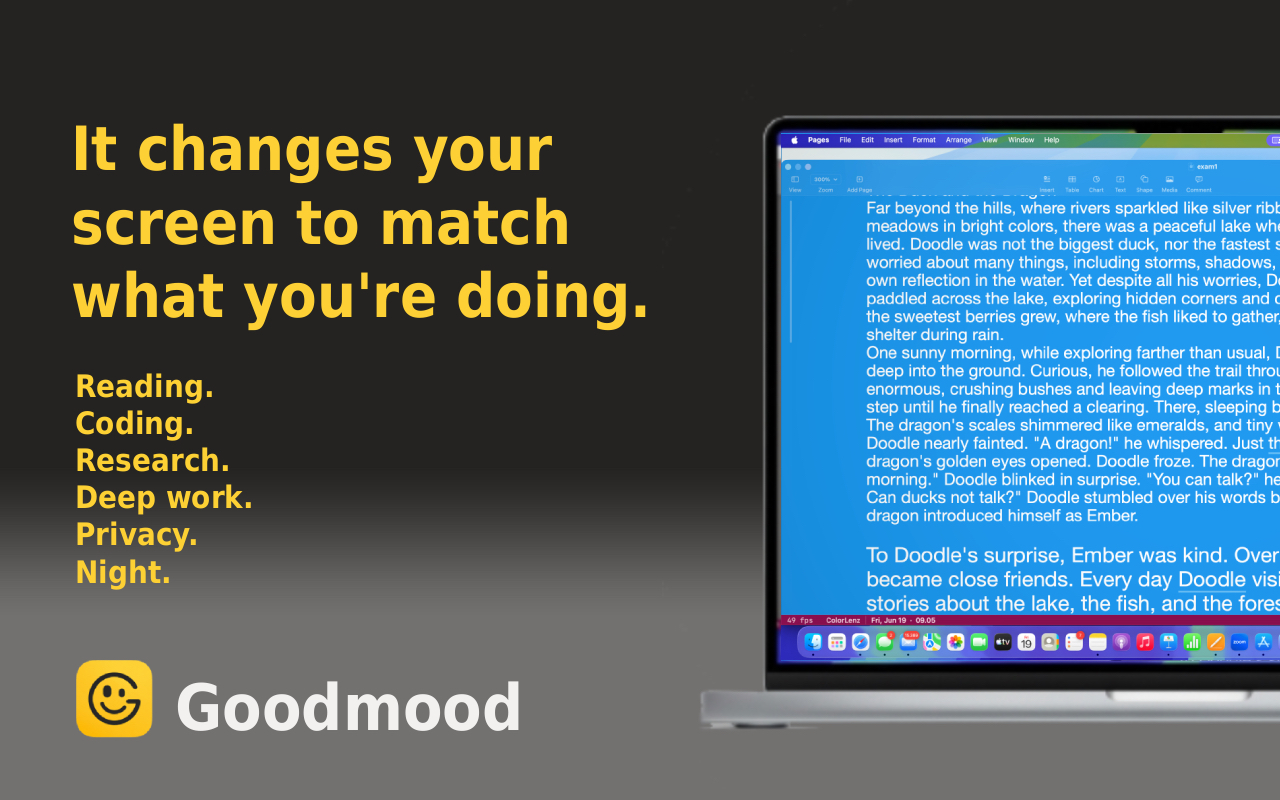
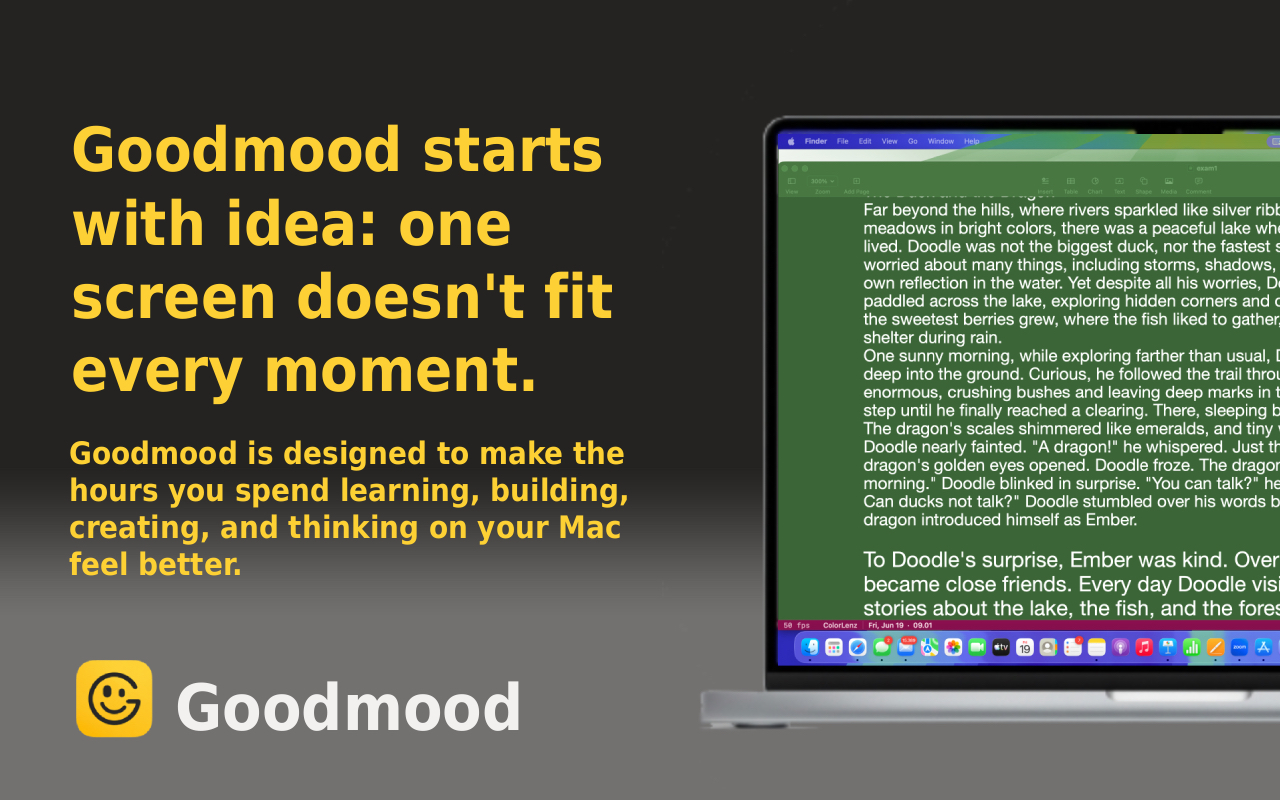
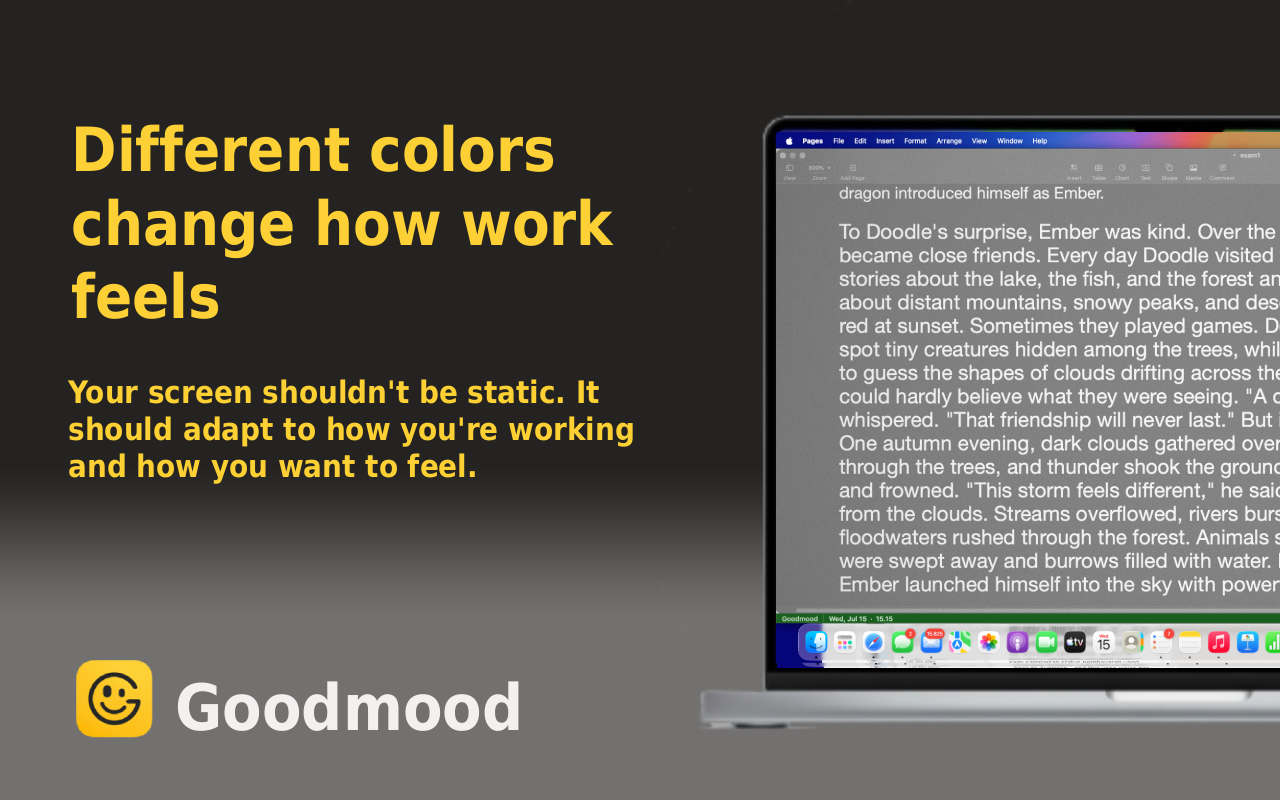
- Screen overlays like Goodmood can help with additional screen glare reduction
- The 20-20-20 rule still applies to reduce eye strain
- Proper lighting and workspace setup matter
- But none of these address the root cause the way spectral filters do
If you suspect Irlen Syndrome, the assessment should be your first step.
Discover Goodmood - Screen Companion

Related Reading
- Why Your Eye Drops Aren’t Working
- 3 Better Alternatives to Blue Light Glasses for Digital Eye Strain
- Can You Eat Your Way to Better Dry Eyes?
- Understanding Perceptual Processing Disorders
- Dyslexia vs. Irlen Syndrome: Key Differences
Sources
Expert:
- Helen Irlen, Founder of the Irlen Institute (YouTube: “Irlen Syndrome and Irlen Method Documentary”)
Key Facts:
- Irlen Syndrome affects 10-12% of the population
- Often misdiagnosed as dyslexia, ADHD, or learning disability
- Colored overlays provide immediate relief for many
- Precision Irlen Spectral Filters customized to individual needs
- Used in 47+ countries, millions of users worldwide
- Scientifically proven method for perceptual processing correction
- Also effective for migraines, headaches, and light sensitivity
Learn More:
- Irlen Institute: https://www.irlen.com/
- Find a Screener: https://www.irlen.com/who-are-certified-irlen-screeners/
- Research and Studies: https://www.irlen.com/what-is-irlen-syndrome/
Want the Full Explanation? Watch the Irlen Syndrome Documentary (15 min)